Product Description
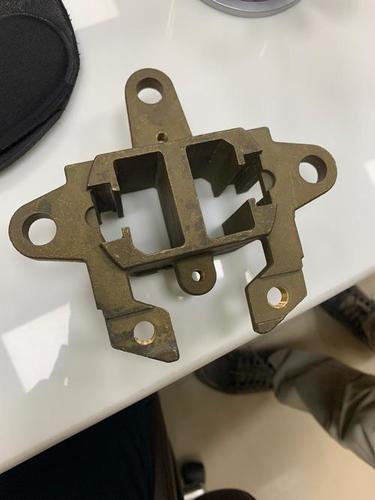
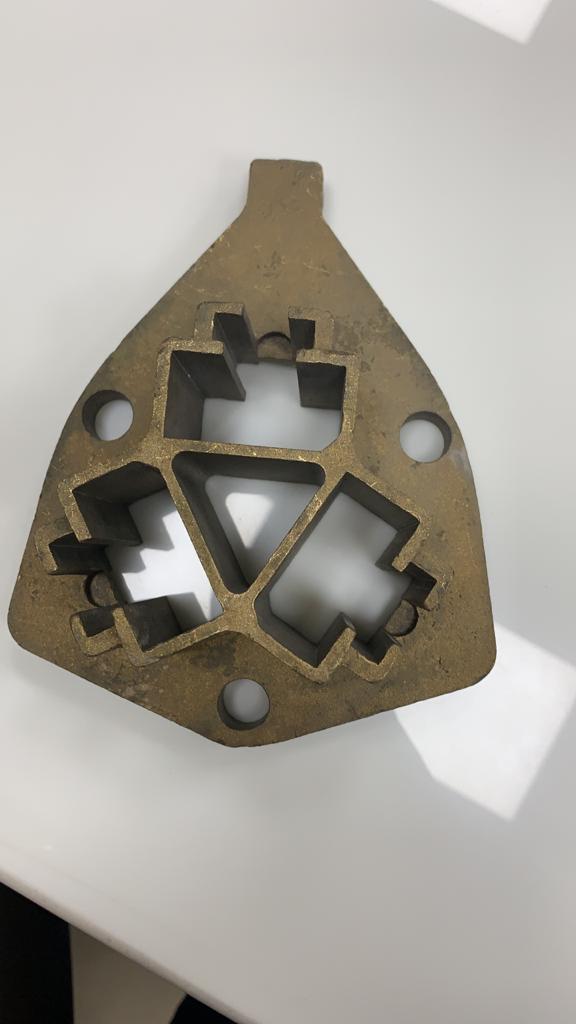
With a focus on the ever-evolving requirements of our clients, we have come up with a wide range of uniquely Carbon/Brass Brush Holder Casting. We are well known as a trusted manufacturer & supplier of the same in the market. Premium quality raw material is used associated with us for years. It is then made by using leading-edge techniques at our unit according to with set industry standards for use in mechanical industry. In addition to this, this Carbon/Brass Brush Holder Casting parts is duly tested on various parameters of quality by our quality experts.
Uses of Carbon/Brass Brush Holder Casting:
- Weld-neck: Finished with a tapered hub, these are conspicuous and utilized in high-pressure situations.
- Slip-on is slipped over the pipe and welded both inside and outside to build quality and counteract spillage
- Lap-joint is used to a lap joint stub end. It is slipped over the pipe however not affixed, not at all like the slip-on.
- Threaded is utilized in uncommon conditions, the strung spine can be appended to the pipe without being welded. These are typically situated on funnels with a profound divider thickness, used to make the interior string.
- Blind is composed without a drag, these are utilized to clear off the finish of funnelling, valves and weight vessel openings. They are likewise most appropriate for elevated pressure and temperature applications.
Manufactured with a combination of carbon and brass, our brush holder castings excel in both electrical performance and durability. The polished surface resists rust and oxidation, enhancing longevity in various industrial environments.
Versatile Application and CompatibilitySuitable for DC and AC motors, as well as generators, these holders guarantee reliable brush positioning, which is critical for uninterrupted machine operations in automotive, industrial, and power generation sectors.
Customisation for Optimal IntegrationWe offer full customisation on dimensions and material composition, ensuring seamless integration into your machinery. Each unit is meticulously crafted to meet your unique operational specifications and requirements.
FAQs of Carbon/Brass Brush Holder Casting:
Q: How does the carbon/brass brush holder casting improve electrical performance in motors and generators?
A: The combination of carbon and brass in the holder provides high electrical and thermal conductivity, ensuring efficient current transfer and heat dissipation, which enhances the overall performance and reliability of DC and AC motors and generators.
Q: What benefits does the corrosion-resistant finish provide?
A: The corrosion-resistant, polished finish protects against rust and oxidation, extending the service life of the holder in demanding environments and reducing maintenance needs.
Q: When should I consider replacing my brush holder casting?
A: Replacement is recommended if you notice excessive wear, reduced mechanical integrity, or signs of corrosion. Regular inspection during scheduled motor maintenance helps ensure uninterrupted operation and protects vital components.
Q: Where can these brush holder castings be used?
A: Our brush holder castings are suitable for a wide range of electric motors and generators used in industrial, automotive, and power generation settings, making them ideal for both new installations and retrofit projects.
Q: What is the typical process for ordering a customised brush holder casting?
A: Clients can provide their specific dimension and material requirements, after which we design, manufacture, and supply castings tailored to those needs, ensuring optimal fit and performance. Assistance is provided throughout the process for seamless procurement.
Q: How do you ensure mechanical strength and vibration resistance?
A: These holders are engineered from robust materials and tested for impact and vibration resistance, ensuring they remain securely mounted and perform reliably under demanding operational conditions.
Q: What are the main advantages of using your brush holder castings?
A: Key advantages include high conductivity, corrosion resistance, robust mechanical design for long-term use, adaptability for custom applications, and compatibility with a wide array of electric machinery.











 Send Inquiry

